A good night in a camper starts with the pitch.
Motorhomes and converted vans make travel flexible, yet the comfort of a stop depends on small choices: where you park, how level you sit, what you plug into, how you handle water and gas, and how you treat the people around you. This guide walks through each step in plain terms, with routines and checklists you can adapt to any vehicle.
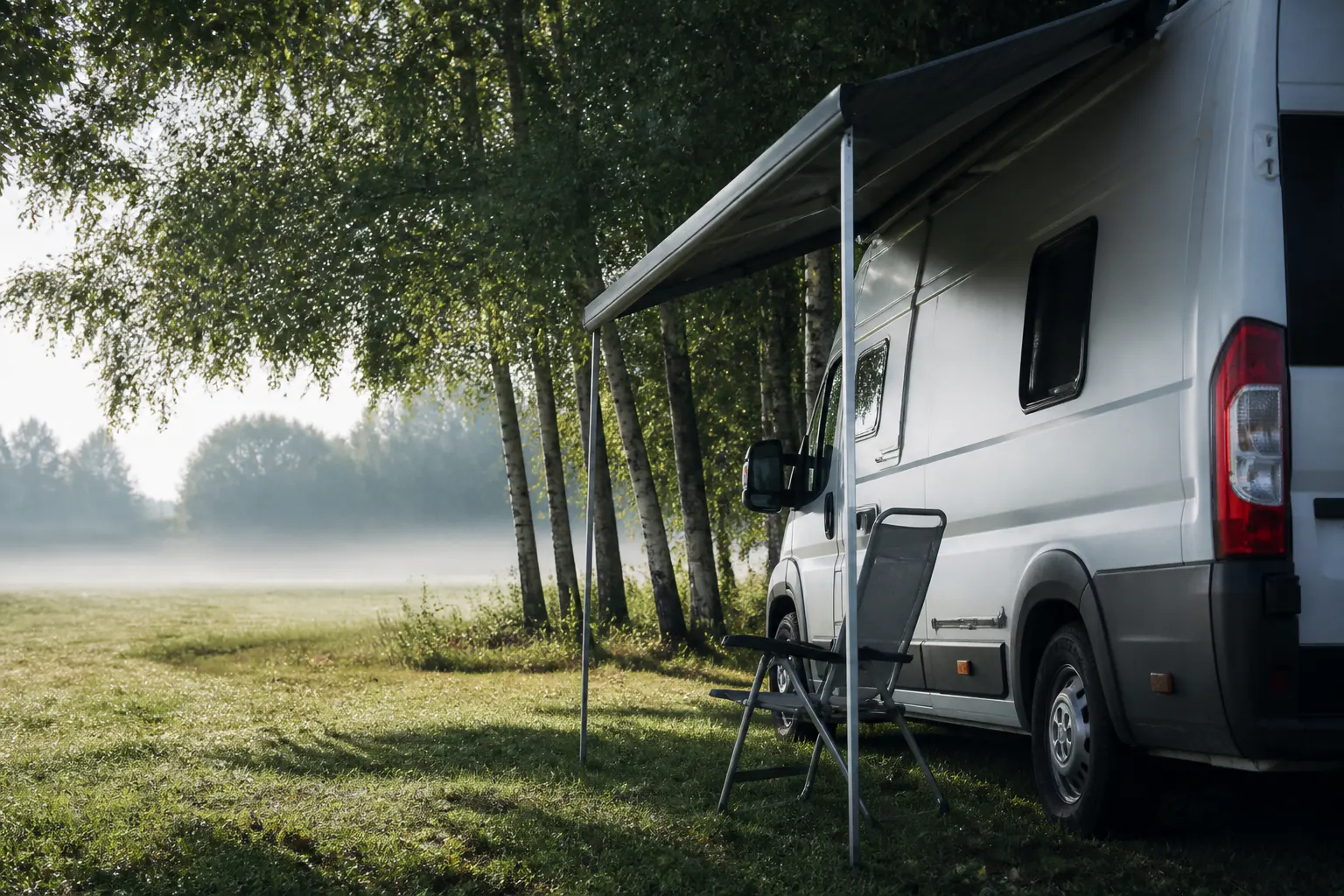
01Choosing a pitch that works
A good pitch is decided before the engine is switched off. Walk the spot first, even if you only have a few minutes of daylight left. Look at the ground, at what is overhead, at where the sun will be at breakfast and where the wind will come from. A flat patch beside a pretty tree can turn into a bad night if the tree drops sap, if the grass hides a soft verge, or if the slope is steeper than it looked from the driver's seat.
Ground and access
Firm gravel, packed earth and dry short grass are the easiest surfaces. Soft sand, wet clay and thick meadow grass can swallow wheels after rain, and a heavy vehicle that sinks on arrival may need help to leave. Press a boot into the surface and look at tyre tracks left by earlier vehicles. If you are unsure, park on the harder strip and use boards under the tyres rather than gambling on the better view.
Space around you
Leave enough room to open doors, roll out an awning and step outside without touching a neighbour's gear. Check the height of branches against your roof, including any roof box, solar frame or antenna. Dead branches above a pitch are a real hazard in wind, so choose another spot if you see them. Point the sliding door or the awning side away from the prevailing wind, and keep the exhaust side clear of walls and bushes.
02Leveling and chocking
Sleeping on a slope is tiring, and a fridge that runs absorption cooling needs the vehicle close to level to work properly. Small tilts of one or two degrees are fine. Beyond that, doors swing, water pools in the shower tray and you slide in the bed.
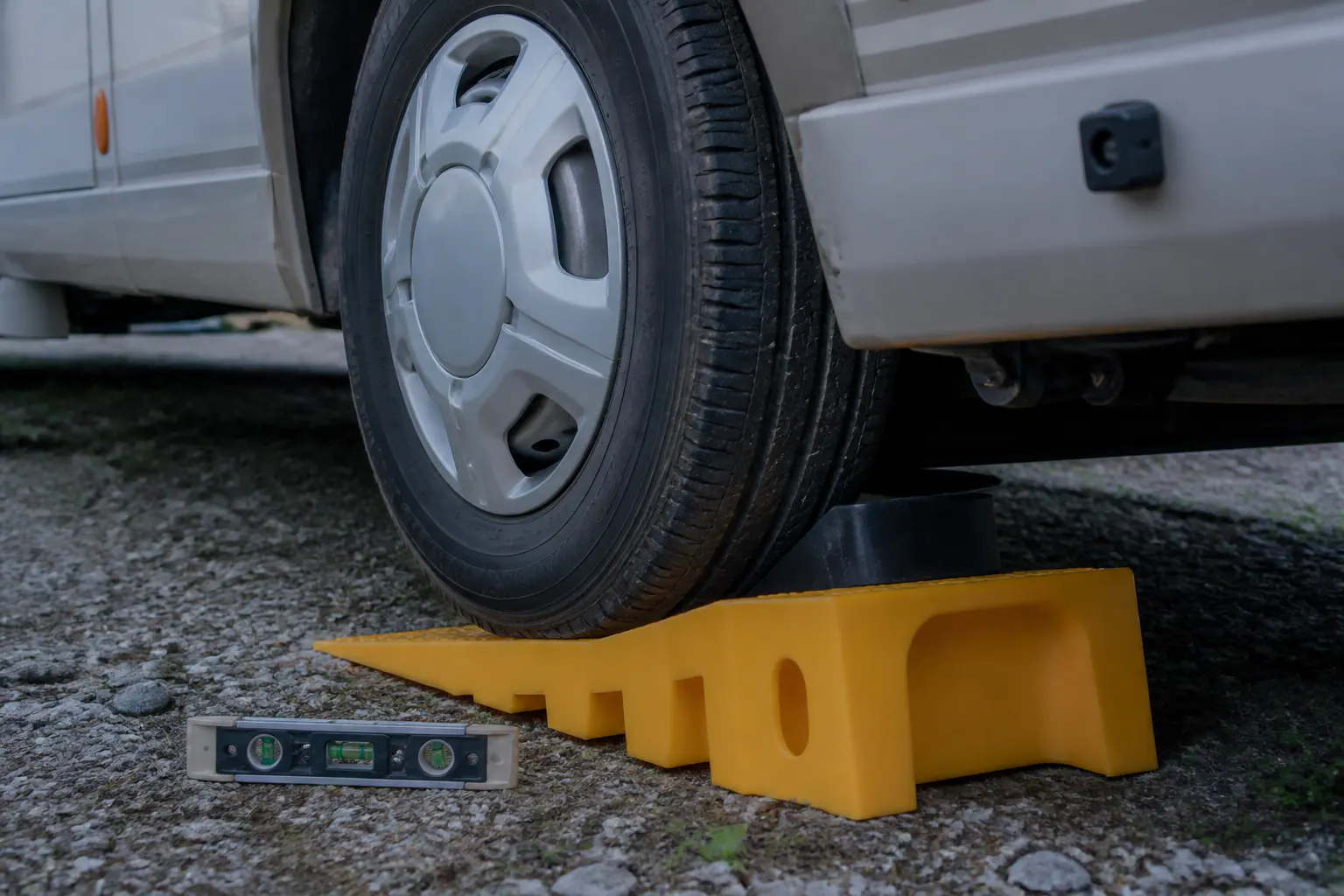
A simple routine
- Park roughly in the final position and check the tilt with a spirit level or a phone level placed on the floor.
- Decide which side is low. Place the ramp or board in front of or behind the low wheel.
- Drive up slowly in small steps, with someone watching, until the bubble is centered.
- Set the handbrake, select a gear or park, and place chocks on the downhill side of a wheel that is not on a ramp.
- Re-check after settling, because ground can compress under weight overnight.
Never rely on a jack to hold a vehicle while people are underneath or inside. Jacks are for changing a tyre, not for leveling a camp.
03Electricity and hookups
Hookup power is convenient, but it is easy to misuse. A campsite post normally supplies a limited current, often between six and sixteen amps, and every appliance in the vehicle draws a share. A kettle, a heater and a microwave together can trip the supply in seconds.
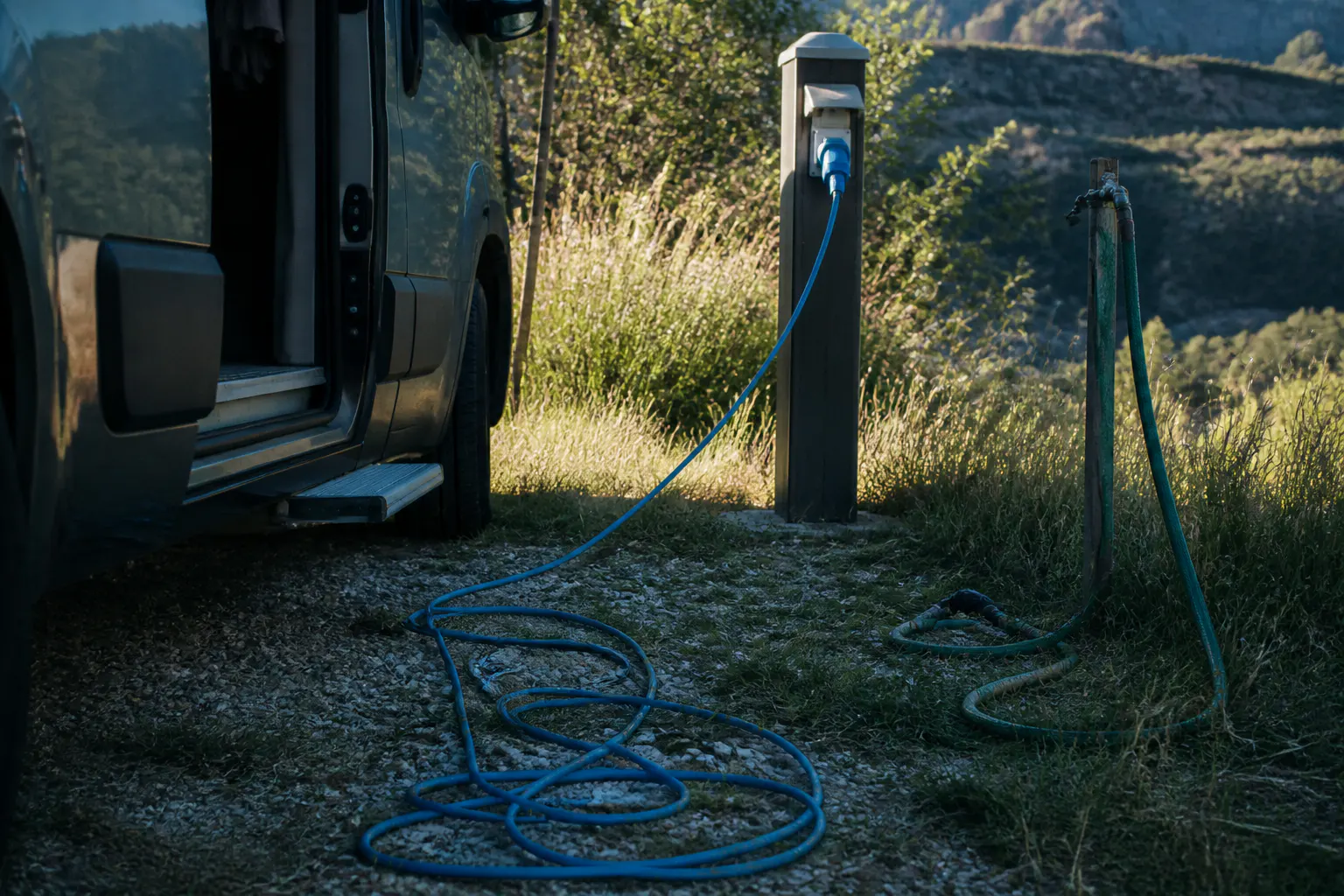
Safe connection
- Switch off the vehicle's breaker and the post's switch before plugging in anything.
- Use a cable made for outdoor use, unrolled completely and kept off puddles. Connect the vehicle end first, then the post end.
- Check that the cable plug and sockets are dry and undamaged. A scorched plug is a reason to stop and replace it.
- Switch on at the post last, then bring appliances on one at a time.
If the post trips, do not keep resetting it. Unplug the heaviest appliance and try again. A polarity tester, a few euros worth of tool, tells you quickly whether a socket is wired as expected. A vehicle with a residual current device should be tested with its test button now and then.
04Fresh water, grey water and waste
Water routines decide how comfortable a trip feels. Fresh water is heavy, so many travellers fill only part of the tank and top up when needed. Use a hose made for drinking water, flush it before connecting, and keep it off the ground when possible so it does not pick up dirt.
Fresh water hygiene
Water that sits in a tank for weeks can taste stale and grow a film inside the pipes. Drain the tank before long stops, refill with clean supply water, and now and then sanitize the system with a product made for it, followed by a thorough rinse. Never fill from a source marked as non-drinking.
Grey water and toilet waste
Grey water from sinks and showers is not clean water, and many places forbid draining it on the ground. Empty it only at a dedicated service point or into a drain meant for it. Toilet cassettes and tanks go to the designated disposal only, never to ground, ditch or roadside. Rinse the emptying spout, wash your hands, and leave the point tidy for the next user.
| Item | Where it goes | Habit |
|---|---|---|
| Fresh water | Tank, from a drinking supply | Flush hose first |
| Grey water | Service point or drain meant for it | Never on the pitch |
| Toilet waste | Designated disposal only | Rinse spout, wash hands |
| Rubbish | Bins, or carried to the next stop | Bag and close it |
05Gas, heat and safety
Gas runs the stove, the water heater, the fridge on some models and often the cabin heater. It is safe when treated with care and risky when ignored. Check hoses for cracks, test joints with soapy water, and replace regulators and pipes when their date or condition says so. A bubble that grows at a joint means a leak.
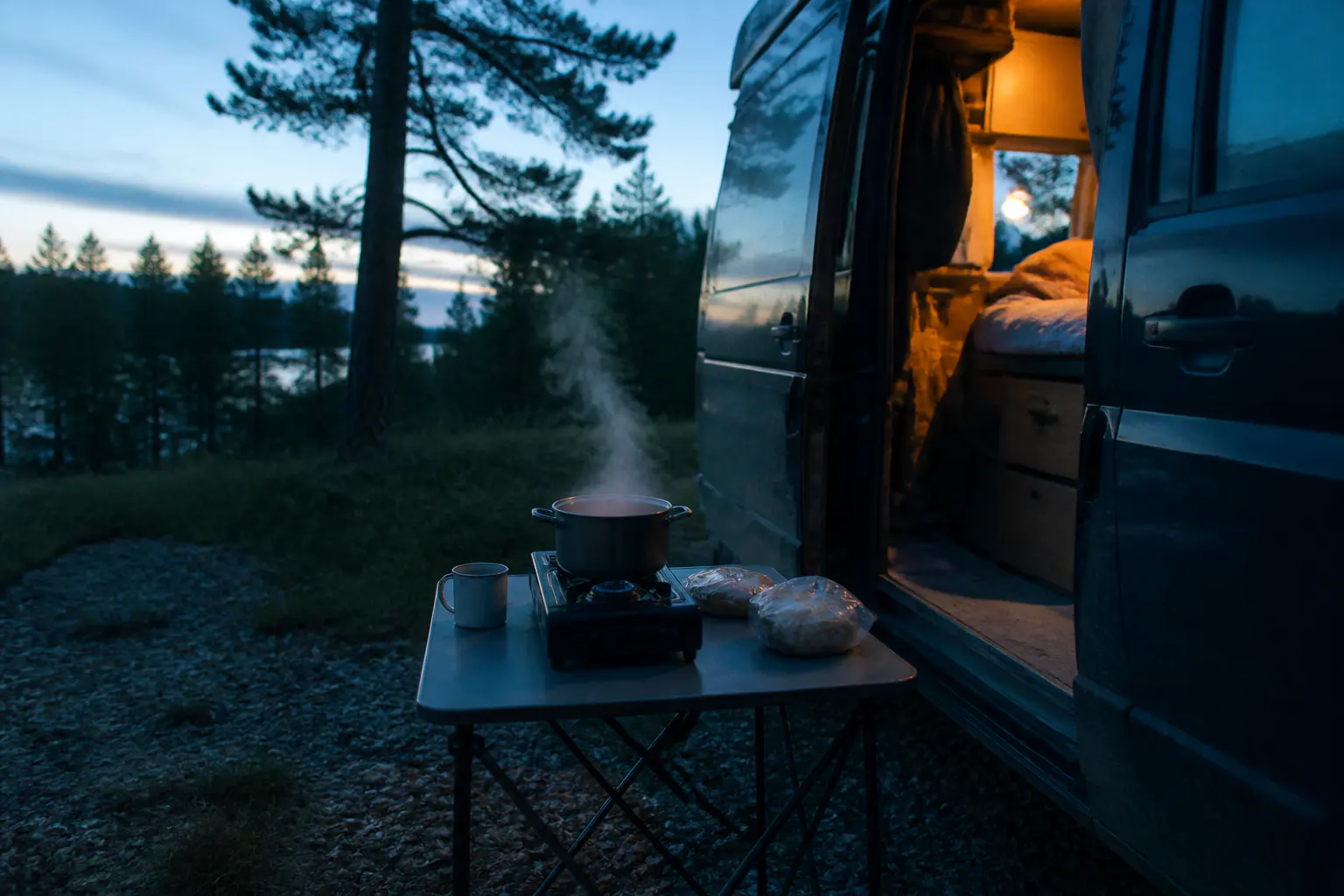
Carbon monoxide and fire
Carbon monoxide has no smell and no color. Fit a detector made for leisure vehicles, test it on arrival and replace it by its date. Never run a barbecue, a camping stove or a portable heater inside a closed cabin to warm it up. Keep a small extinguisher and a fire blanket within reach of the door, and learn where the gas shut-off sits so anyone in the vehicle can find it in the dark.
Ventilation is part of safety. Keep a roof vent or window slightly open even in cold weather, because breathing and cooking add moisture that otherwise condenses on every cold surface.
06Budgeting your energy
Off hookup, electricity comes from a leisure battery, topped up by the engine, by solar panels or by a charger. The simple task is to compare what you use with what you can recover in a day.
Counting consumption
List each device, its power in watts and the hours you use it. A lamp, a water pump, a phone charger, a laptop and a compressor fridge are the usual suspects. Multiply watts by hours to get watt-hours, then add them up. Include a margin of twenty percent, because wiring and inverters waste some energy as heat.
| Device | Typical draw | Daily habit |
|---|---|---|
| LED lights | Low | Switch off when leaving |
| Compressor fridge | Moderate, cycles on and off | Keep it full and shaded |
| Laptop and phones | Moderate | Charge while driving |
| Inverter loads (kettle, hair dryer) | Very high | Avoid off hookup |
Protect the battery
Many lead-acid batteries last longer if they are not drained below half. Lithium types allow deeper use, but they still dislike deep cold while charging. A battery monitor with a shunt shows real use and beats a simple voltage reading. On a cloudy week, cut the heavy loads first and shift charging to driving days.
07Weather and seasons
Seasons change how you camp more than where you camp. In summer the issue is heat: park in shade, open vents on opposite sides to create a draught and use reflective covers on the windscreen. In winter the issue is condensation and cold: insulate windows, ventilate a little and keep bedding dry.
Wind, rain and storms
Wind is the one that surprises people. An awning is a sail, so roll it in at night, before leaving the pitch and whenever gusts begin. In heavy rain, avoid parking in dips, beside rivers or beneath weak branches. If a storm warning appears, move to firmer, higher and more open ground, and never shelter under a lone tree.
Cold starts
Check tyre pressure, fluid levels and battery condition before a cold trip. Keep a shovel, gloves and a warm layer within reach, and carry enough water in a form that will not freeze in a pipe.
08Manners, packing and checklists
Camping works because people share space politely. Keep noise low after evening, point lights down, keep dogs under control and leave no trace. Take everything with you that you brought, and a little more when you can. Greet neighbours if they seem open to it, and respect a closed awning as a closed door.
Arrival checklist
- Walk the pitch, choose the position and check the overhead space.
- Level, brake, chock and switch off the engine.
- Connect power safely, or check the battery state.
- Open vents, test the gas and carbon monoxide alarms.
- Set up the outdoor area last, away from exits and neighbours.
Departure checklist
- Close roof lights, secure cupboards and fridge door.
- Roll in the awning, unplug cable and store it dry.
- Empty waste at the right point, check the pitch for litter.
- Walk once around the vehicle before you move.
Useful extras are a headlamp, a basic tool kit, spare fuses, a tyre pressure gauge, a first aid kit and a printed paper map for places with no signal.
Short questions
How level does a motorhome need to be?
Within about two degrees side to side is comfortable for most people. Fridges that use absorption cooling are more sensitive and work best close to level.
Can I plug into any hookup post?
Only if the supply suits your cable, plug and total load. Check the post amperage, switch off first and add up your appliances so the supply is not overloaded.
Where can I empty grey water?
At a service point or drain meant for that purpose. Draining on the ground is forbidden in many places and harms the pitch for everyone else.
How long does a leisure battery last without hookup?
It depends on its capacity and your daily use. List your devices in watt-hours and compare the total to half of the battery capacity for a lead-acid type.
Is it safe to sleep with the gas heater on?
Only with a working carbon monoxide alarm, correct ventilation and a heater designed for the purpose. Never use an open-flame cooker or barbecue to warm the cabin.